
U.n.i Klinik Sandakan

Circumcision in Sandakan, Sabah

Doctor explaining circumcision procedure to parent and child in Sandakan

Circumcision, also known as (sunat/ berkhatan) is a minor surgical procedure that removes the foreskin covering the tip of the penis. It is one of the most commonly performed procedures in Malaysia carried out for religious, cultural, and medical reasons. Whether your child is getting ready for khatan or you are an adult considering the procedure, choosing a clean, well-equipped clinic with an experienced doctor is essential for a safe and comfortable experience.

At U.n.i Klinik Sandakan, we perform circumcision using modern techniques in a sterile clinical environment. Our doctor has experience with children, teenagers, and adult circumcision (sunat dewasa), and will guide you through every step from consultation and method selection to aftercare instructions. We offer multiple methods including sunat laser, sunat stapler, and the clamp method, so you can choose the approach that best suits your needs.

Who Is Circumcision (Sunat) For?

Circumcision is suitable for males of all ages from infants to adults. At our clinic in Sandakan, we commonly perform the procedure for:

  • Children (school-age boys) — the most common age group for sunat in Malaysia, typically between ages 7 to 12, often during school holidays
  • Teenagers — adolescents who have not yet been circumcised and wish to undergo the procedure
  • Adults (sunat dewasa) — men who choose circumcision for religious, personal, hygiene, or medical reasons
  • Infants (sunat bayi) — newborn circumcision performed within the first few weeks of life


Circumcision may also be medically recommended for conditions such as:

  • Phimosis — a tight foreskin that cannot be pulled back over the head of the penis, causing difficulty with hygiene, urination, or discomfort
  • Paraphimosis — a condition where the retracted foreskin becomes trapped behind the head of the penis and cannot be returned to its normal position
  • Recurring balanitis — repeated infections or inflammation of the foreskin and glans
  • Recurrent urinary tract infections (UTIs) — where circumcision may reduce the risk of future infections

If you or your child is experiencing foreskin-related problems such as phimosis, our doctor can assess whether circumcision is the appropriate treatment or whether other options should be explored first.

Circumcision Methods Available at Our Clinic

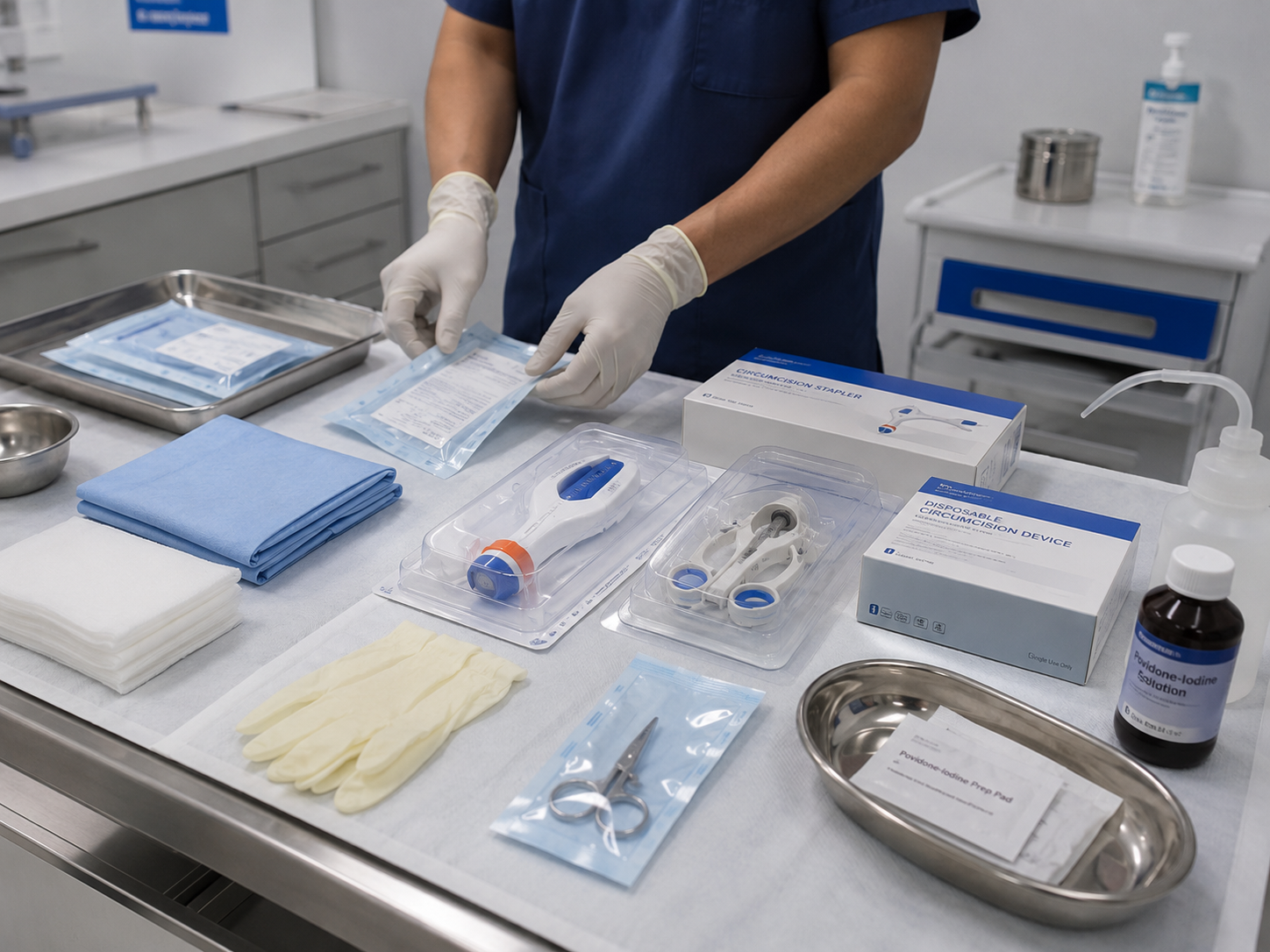
Modern sterile equipment used for circumcision proceduresWe offer several modern sunat methods. Our doctor will explain each option during the consultation and recommend the most suitable approach based on the patient’s age, anatomy, and preference.

Method

How It Works

Key Features

Sunat Laser

Uses a diathermy device (often referred to as “laser”) to cut and cauterise the foreskin simultaneously, minimising bleeding during the procedure

Minimal bleeding, quick procedure. Suitable for children and adults. Requires wound care and dressing changes during healing.

ZSR / Disposable Circumcision Stapler

 (Sunat Staple) 

A single-use stapler device cuts the foreskin and applies a ring of small staples simultaneously. The staples hold the wound edges together and fall off naturally as the area heals.

Faster procedure time, minimal bleeding, and reduced need for manual stitching. Often preferred for a cleaner, more consistent cosmetic result. Suitable for older children, teenagers, and adults.

Clamp Method (Sunat Klamp)

A clamp device is placed over the glans beneath the foreskin to hold it in position. The excess foreskin is then cut and removed, and the clamp is taken off immediately after the procedure. The wound edges are secured, and a sterile dressing is applied.

Well-established method with a long safety record. Commonly used for younger children and infants. The clamp is removed immediately after the cut, so there is no device left on the body during healing.

Conventional / Dorsal Slit Method

The foreskin is cut and removed manually using a scalpel, and the wound edges are closed with dissolvable stitches.

Traditional surgical method suitable for complex cases, including severe phimosis or when other methods are not appropriate. Allows the doctor full control over the amount of foreskin removed.

What to Expect During Your Visit

Step 1: Consultation and Assessment

Your visit begins with a consultation where our doctor will examine the patient, discuss the reason for circumcision, review any medical history or allergies, and explain the available circumcision methods. For children, the doctor will speak with both the parent and the child to ensure everyone is comfortable and informed. This is also the time to ask any questions about the procedure, recovery, and aftercare.

Step 2: Method Selection and Consent

Based on the examination and discussion, our doctor will recommend the most suitable method. You will be given a clear explanation of the procedure, expected recovery time, and aftercare requirements before providing your consent. For children, consent is given by the parent or guardian.

Step 3: The Circumcision Procedure

The procedure is performed under local anaesthesia where an injection that numbs the area so there is no pain during the procedure. Once the anaesthesia takes effect, the doctor will proceed with the chosen method. The entire procedure typically takes 15 to 30 minutes depending on the technique used. The patient remains awake throughout and can communicate with the doctor at any time.

Step 4: Dressing and Aftercare Instructions

After the procedure, the area is cleaned and dressed with a sterile bandage. Our doctor will provide detailed aftercare instructions, including how to clean the wound, when to change the dressing, what to expect during healing, and when to return for a follow-up check. Pain medication will be prescribed to manage any discomfort during the first few days.

Aftercare and Recovery (Penjagaan Selepas Sunat)

Doctor explaining circumcision aftercare to a parentProper aftercare is important for a smooth and comfortable recovery. Here is what to expect:


  • The first 24 to 48 hours — mild swelling, bruising, and discomfort are normal. Pain medication prescribed by our doctor will help manage this. Rest is recommended.
  • Wound care — keep the area clean and dry. Follow the specific dressing change instructions given by our doctor, as these vary depending on the method used (laser, stapler, or clamp).
  • Bathing — sponge baths are recommended for the first 2 to 3 days. Avoid soaking the wound in water. After that, gentle washing is usually permitted.
  • Activity — avoid running, cycling, and vigorous physical activity for at least 1 to 2 weeks. Children should avoid playground activities during this period.
  • Clothing — wear loose, comfortable clothing (sarong or loose shorts) to reduce friction on the healing area.
  • Healing timeline — most patients heal within 7 to 14 days, though full healing may take up to 4 to 6 weeks. The stitches (if used) are dissolvable and do not need to be removed.
  • Follow-up visit — return to our clinic for a follow-up check as advised by our doctor, typically within 5 to 7 days after the procedure.


When to seek immediate medical attention: 

  • Excessive bleeding that does not stop with gentle pressure
  • Signs of infection such as increasing redness, swelling, warmth, pus, or foul smell
  • Fever above 38°C
  • Difficulty urinating or inability to pass urine
  • Severe pain that is not relieved by the prescribed medication


If you notice any of these signs, contact our clinic immediately or visit the nearest emergency department.

Is Circumcision Safe?

Yes. Circumcision is one of the most commonly performed minor surgical procedures worldwide, with a very low complication rate when carried out by a trained doctor in a sterile clinical environment. At U.n.i Klinik Sandakan, our doctor performs the procedure using modern techniques and sterile, single-use instruments to minimise risk.

The procedure is done under local anaesthesia, meaning the patient is awake but feels no pain in the treated area. Mild discomfort, swelling, and bruising after the procedure are normal and resolve within one to two weeks with proper aftercare.

Circumcision has been shown to offer several long-term health benefits, including a reduced risk of urinary tract infections, lower transmission rates of certain sexually transmitted infections, prevention of phimosis and related foreskin problems, and easier genital hygiene. These benefits are well-documented by medical organisations worldwide.

Why Choose U.n.i Klinik Sandakan for Circumcision?

Experienced Doctor

Every circumcision at our clinic is performed by our qualified doctor. You can trust that the procedure is in safe, experienced hands.

Multiple Modern Methods

We offer sunat laser, sunat stapler, and the clamp method so you can choose the technique that best suits your child's or your own needs, with the doctor's guidance.

Clean, Sterile Clinical Environment

Our procedure room follows strict hygiene and infection control protocols. All instruments are sterile and single-use where applicable, ensuring the highest safety standards.

Walk-In Friendly, 7 Days a Week

Open Monday to Sunday, 9:00 AM to 10:00 PM. Book your consultation via WhatsApp, or walk in during operating hours.

FAQ about Circumcision

Frequently Asked Questions

Circumcision can be performed at any age. In Malaysia, it is most commonly done for boys between ages 7 to 12, often timed with school holidays. However, it is also safe and commonly performed on infants, teenagers, and adults. Our doctor will assess suitability based on the individual patient.

Each method has its advantages, and the best choice depends on the patient's age, anatomy, and personal preference. Sunat laser offers minimal bleeding. Sunat stapler provides a clean, consistent result with faster procedure time. The clamp method is well-established and widely used for younger children. Our doctor will explain each option and recommend the most suitable one during your consultation.

The procedure is performed under local anaesthesia, so the patient does not feel pain during the procedure itself. There may be mild discomfort during the anaesthetic injection, but this passes within seconds. After the procedure, mild soreness and swelling are normal for the first few days and are managed with prescribed pain medication.

The procedure typically takes 15 to 30 minutes, depending on the method used. The entire visit including consultation, procedure, and aftercare briefing usually takes about 45 minutes to 1 hour.

Most patients recover within 7 to 14 days. During this time, the wound heals and any swelling subsides. Full healing may take 4 to 6 weeks. Children should avoid strenuous activities, running, and cycling for at least 1 to 2 weeks. Our doctor will provide detailed aftercare instructions and schedule a follow-up visit.

Yes. Adult circumcision is a common and safe procedure. It is performed under local anaesthesia and uses the same modern techniques available for children. Recovery may take slightly longer for adults, and our doctor will advise on specific aftercare requirements, including time off from work and physical activity restrictions.

Book Your Circumcision Appointment in Sandakan

Ready to schedule your child’s circumcision or your own circumcision? Book your consultation at U.n.i Klinik Sandakan and let our doctor guide you through the process from method selection to a smooth, comfortable recovery.