U.n.i Klinik Sandakan

Minor Surgery in Sandakan, Sabah

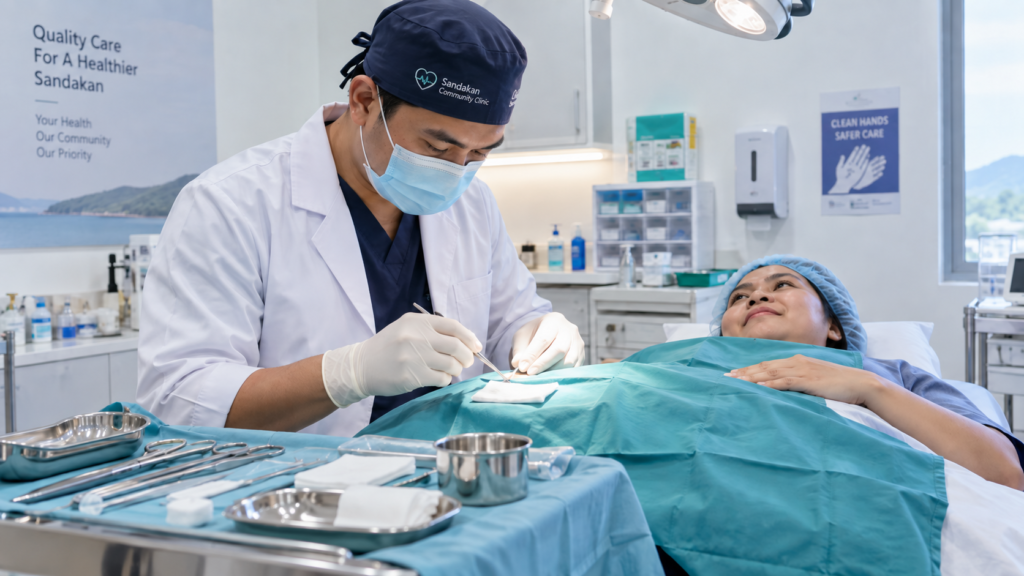
Minor surgery procedure at U.n.i Klinik Sandakan

Minor surgery (pembedahan kecil) refers to small surgical procedures that can be safely performed in a clinic setting under local anaesthesia without the need for a hospital, general anaesthesia, or overnight stay. These procedures address a wide range of common conditions from draining a painful abscess (bisul) and removing an ingrown toenail to excising a lipoma, cyst, or mole.

At U.n.i Klinik Sandakan, our doctor performs a range of minor surgical procedures in a clean, sterile environment using modern instruments. Every procedure is done under local anaesthesia so you feel no pain during the process. Most procedures take 15 to 45 minutes, and you can go home the same day with clear aftercare instructions.

Minor Surgery Procedures We Perform

Our clinic handles the following minor surgical procedures. All are performed by our qualified doctor under local anaesthesia:

Procedure

Description

Abscess Drainage (Incision & Drainage)

An abscess (bisul) is a painful, pus-filled swelling caused by bacterial infection beneath the skin. Incision and drainage (I&D) involves making a small cut to release the pus, cleaning the cavity, and packing or dressing the wound. This provides immediate pain relief and allows the infection to heal. Oral antibiotics may also be prescribed.

Ingrown Toenail Removal

An ingrown toenail occurs when the edge of the nail grows into the surrounding skin, causing pain, swelling, and infection. Our doctor removes the offending nail edge under local anaesthesia and treats any infection present. For recurring cases, a partial nail avulsion with chemical matrixectomy may be performed to prevent regrowth.

Lipoma Removal

A lipoma is a soft, fatty lump beneath the skin that is almost always benign. If the lipoma is growing, painful, cosmetically bothersome, or located in an area that causes discomfort, our doctor can excise it under local anaesthesia through a small incision. The removed tissue can be sent for laboratory analysis if needed.

Cyst Removal

Sebaceous cysts and epidermoid cysts are common skin lumps caused by blocked glands or hair follicles. If a cyst becomes infected, painful, or keeps recurring, surgical excision removes the cyst and its capsule to prevent recurrence. Infected cysts may need to be drained first and excised once the infection settles.

Mole Removal

Moles (nevi) that are changing in size, shape, or colour, or that are cosmetically unwanted, can be removed by surgical excision or shave removal. The removed tissue is sent for histological examination to rule out any abnormality. Our doctor will advise on the most appropriate removal method based on the mole’s characteristics.

Wart Removal (Buang Ketuat)

Warts (ketuat) are caused by the human papillomavirus (HPV) and can appear on the hands, feet, face, or body. Removal methods include cryotherapy (freezing), electrocautery, or surgical excision depending on the wart’s size, location, and type. Multiple sessions may be needed for stubborn or multiple warts.

Wound Suturing (Jahitan Luka)

Deep cuts, lacerations, and gaping wounds that require closure are stitched using dissolvable or non-dissolvable sutures. Proper suturing promotes faster healing, reduces scarring, and prevents infection. Our doctor will assess the wound, clean it thoroughly, and close it with the appropriate technique.

Foreign Body Removal

Splinters, glass fragments, fish hooks, thorns, or other embedded objects that cannot be safely removed at home. Our doctor uses sterile instruments and local anaesthesia (if needed) to locate and extract the foreign body, then cleans and dresses the wound.

Skin Tag Removal

Small, benign skin growths (skin tags) that are cosmetically unwanted or get caught on clothing or jewellery. Removed quickly via snip excision, electrocautery, or cryotherapy. Existing skin tag removal page available.

Circumcision (Sunat)

We perform circumcision using modern methods including sunat laser (diathermy), ZSR stapler, and clamp technique. Available for children, teenagers, and adults (sunat dewasa). The procedure is done under local anaesthesia and takes 15 to 30 minutes. For full details on circumcision methods, recovery, and aftercare, see our dedicated circumcision (sunat) service page

Scar Revision

Treatment for problem scars including deep scars and keloid scars. Options include surgical excision of the scar tissue, silicone-based scar treatment (sheets or gel), corticosteroid injection to flatten and soften raised keloid scars, and wound re-closure with refined technique to improve cosmetic appearance. Our doctor will assess the scar type, location, and history before recommending the most appropriate treatment approach.

Stitch / Staple Removal

Removal of sutures or staples from wounds stitched at our clinic or at another facility (e.g. hospital discharge). Timing depends on the wound location typically 5 to 14 days after the procedure.

Not sure if your condition requires minor surgery? Walk in or book a consultation. Our doctor will examine your condition and advise whether a procedure is needed, or whether non-surgical treatment is more appropriate.

What to Expect During Minor Surgery

Step 1: Consultation and Examination

Our doctor will examine the area of concern, take a brief medical history (including allergies and current medications), and explain whether a minor surgical procedure is needed. You will receive a clear explanation of what the procedure involves, expected recovery time, and aftercare requirements before giving your consent.

Step 2: Local Anaesthesia

The area is numbed using a local anaesthetic injection. You may feel a brief sting during the injection, but once the anaesthesia takes effect (within 1 to 2 minutes), you will feel no pain during the procedure. You remain fully awake and can communicate with the doctor throughout.

Step 3: The Procedure

The doctor performs the procedure using sterile, single-use instruments in our procedure room. Depending on the type of surgery, this may involve making a small incision, draining fluid or pus, excising tissue, removing a foreign body, closing a wound with sutures, or treating a scar. Most procedures take 15 to 45 minutes.

Step 4: Wound Closure and Dressing

After the procedure, the wound is cleaned and closed (if appropriate) using sutures, adhesive strips, or left open to heal depending on the type of wound. A sterile dressing is applied. For tissue samples (lipoma, cyst, mole), the specimen may be sent for laboratory analysis (histopathology) if clinically indicated.

Step 5: Aftercare Instructions and Follow-Up

Our doctor will provide detailed aftercare instructions including wound care, dressing changes, signs of infection to watch for, activity restrictions, and when to return for suture removal or follow-up review. Pain medication and antibiotics will be prescribed if needed. For wound dressing follow-up, our wound dressing service is available 7 days a week.

Abscess (Bisul) — When to See a Doctor

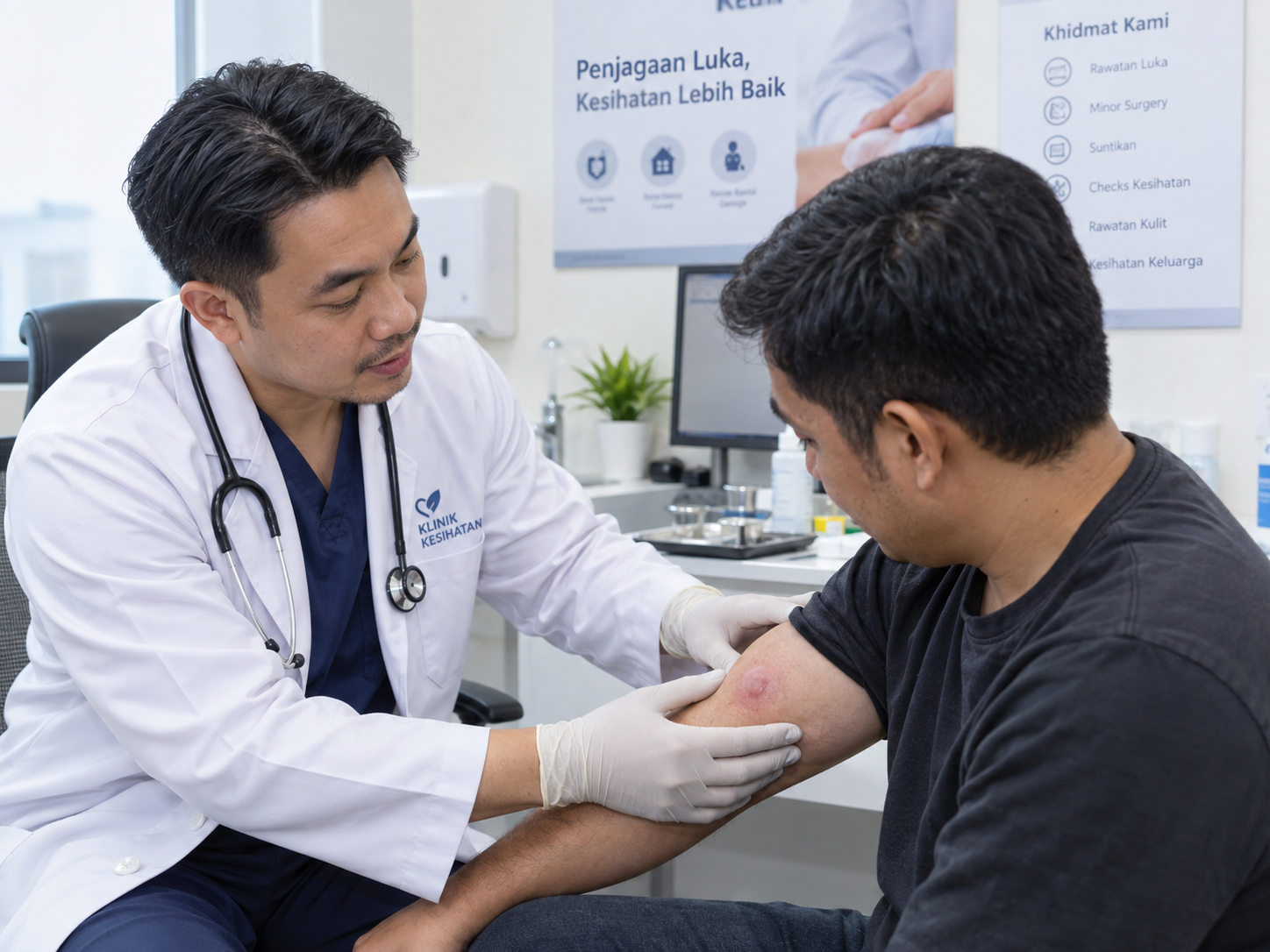
Doctor assessing a swollen areaAn abscess (bisul) is one of the most common reasons patients visit our clinic for minor surgery. An abscess forms when bacteria enter the skin through a cut, hair follicle, or sweat gland, causing a pocket of pus to build up beneath the surface. It appears as a painful, swollen, warm lump often with a visible white or yellow head.
You should see a doctor for your abscess if:

  • The abscess is larger than 2 cm (about the size of a 10-sen coin) or growing rapidly
  • It is extremely painful and affecting your daily activities or sleep
  • The skin over the abscess is taut, shiny, and feels like it is about to burst
  • You have fever, chills, or feel generally unwell alongside the abscess
  • The abscess is located on the face, groin, armpit, or near the anus
  • You have diabetes or a weakened immune system, which increases the risk of complications
  • You have tried warm compresses for 2 to 3 days with no improvement


Home remedies (warm compresses, over-the-counter antibiotics) may help small, superficial boils. However, a true abscess with a significant pus collection requires incision and drainage; the pus must be physically drained for the infection to resolve. Antibiotics alone cannot penetrate a walled-off abscess cavity. Our doctor performs I&D safely under local anaesthesia, providing immediate pain relief.

Scar Revision — Treatment for Problem Scars

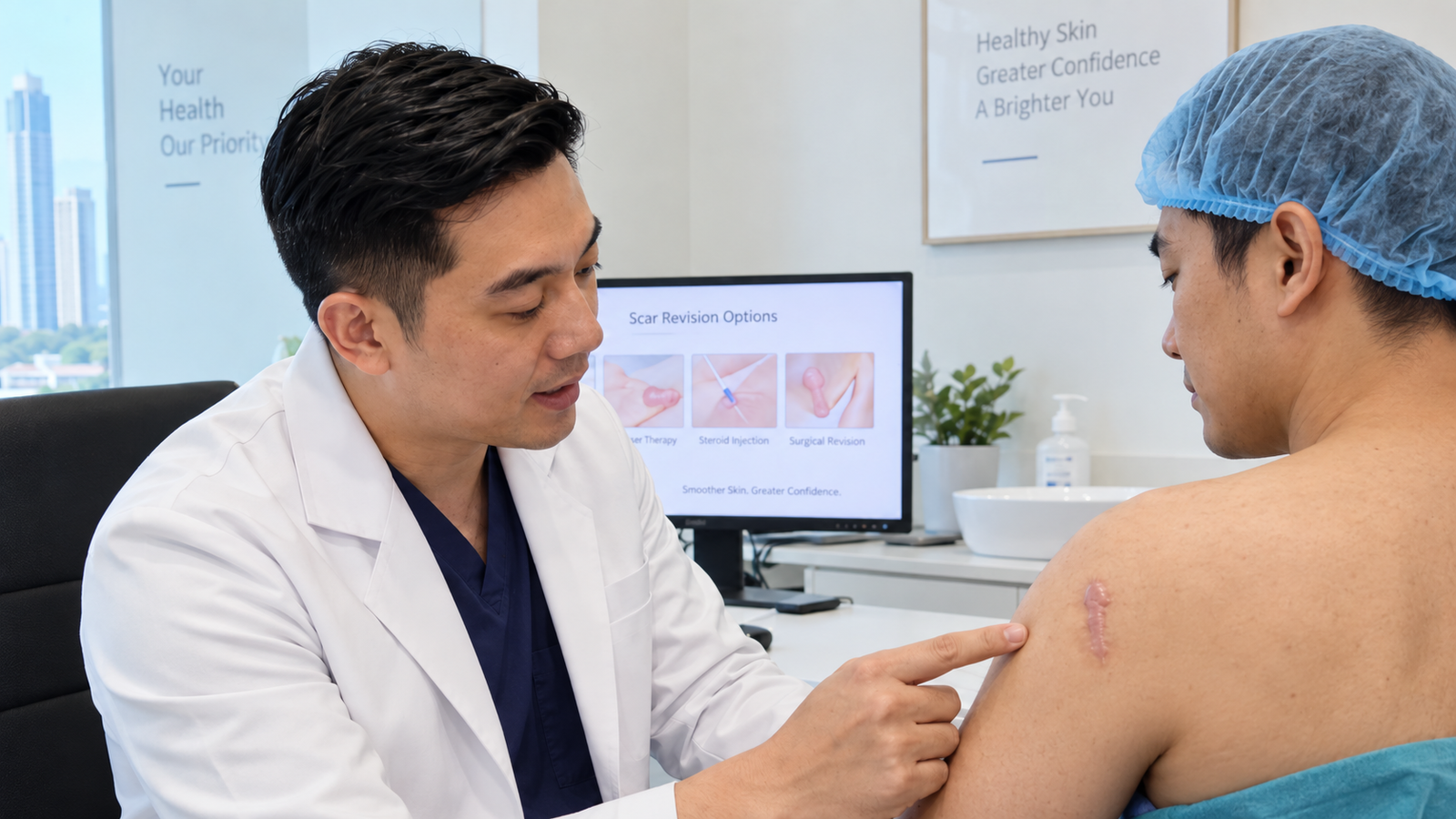
Doctor examining keloid/scarNot all scars heal the way we hope. Some scars become raised, thickened, or discoloured causing discomfort, itching, tightness, or cosmetic concerns. At our clinic, we offer scar revision treatment for:

  • Keloid scars — raised, firm, rubbery scars that grow beyond the boundary of the original wound. Keloids can be painful or itchy and often continue to grow over time. Treatment options include corticosteroid injection to flatten and soften the scar, surgical excision, and silicone-based therapy to prevent recurrence.
  • Deep scars — depressed or sunken scars from previous injuries, surgery, or acne. Surgical revision involves re-excising the scar and closing the wound with refined suturing technique to produce a smoother, less visible result.
  • Hypertrophic scars — raised scars that stay within the boundary of the original wound (unlike keloids). Often respond well to silicone sheets, gel, or corticosteroid injection.
  • Tight or contracture scars — scars that restrict movement, especially around joints or across skin creases. Surgical revision releases the tightness and improves function.

Our doctor will assess the scar type, age, location, and your treatment goals before recommending the most appropriate approach. In many cases, a combination of techniques surgical excision plus silicone therapy or steroid injection produces the best outcome.

Is Minor Surgery at a Clinic Safe?

Yes. Minor surgery performed in a properly equipped clinic by a qualified doctor is safe and routine. Our procedure room follows strict infection control protocols as all instruments are sterile or single-use, the treatment area is cleaned between patients, and aseptic technique is maintained throughout every procedure.

All procedures are performed under local anaesthesia, meaning you are awake but feel no pain at the procedure site. Complications from minor surgery are uncommon and typically limited to mild bruising, swelling, or post-procedure discomfort and all of which resolve within days.

For excised tissue (lipomas, cysts, moles, or suspicious lesions), we can arrange histopathological examination at an accredited laboratory to confirm the diagnosis and rule out any abnormality.

Why Choose U.n.i Klinik Sandakan for Minor Surgery?

Experienced Doctor

Every procedure is performed by our qualified doctor, not a medical assistant. You can trust that even a "minor" surgery is done with the skill and care it deserves.

Sterile Clinical Environment

Our procedure room meets clinical standards for minor surgery with sterile instruments, proper lighting, and infection control protocols followed for every case.

Wide Range of Procedures

From abscess drainage and ingrown toenail removal to lipoma, cyst, mole removal, circumcision, and scar revision, we handle the most common minor surgical needs under one roof.

Walk-In Friendly, 7 Days a Week

Open Monday to Sunday, 9:00 AM to 10:00 PM. Many minor procedures can be performed on the same day as your consultation. Book ahead via WhatsApp or walk in.

FAQ About Minor Surgery

Frequently Asked Questions

You will feel a brief sting during the local anaesthetic injection, but once the area is numb (within 1 to 2 minutes), you will feel no pain during the procedure. After the anaesthesia wears off (1 to 3 hours later), mild soreness is normal and is managed with prescribed pain medication.

Most procedures take 15 to 45 minutes, depending on the type and complexity. The entire visit including consultation, procedure, and aftercare briefing typically takes about 1 hour.

Most minor surgical procedures leave a small scar. The size and visibility of the scar depends on the procedure, wound location, and your skin's healing characteristics. Our doctor uses careful technique and fine sutures to minimise scarring. Scar care advice will be provided during follow-up.

Yes. We offer keloid scar treatment including corticosteroid injection to flatten and soften the scar, surgical excision of the keloid tissue, and silicone-based therapy (sheets or gel) to prevent recurrence. Our doctor will assess your keloid and recommend the most effective treatment approach often a combination of methods works best.

Yes. We perform circumcision (sunat) using modern methods including sunat laser (diathermy), ZSR stapler, and clamp technique. Available for children, teenagers, and adults. For full details on methods, recovery, and aftercare, visit our dedicated circumcision (sunat) page. 

If non-dissolvable sutures are used, you will need to return for stitch removal typically 5 to 14 days after the procedure depending on the wound location. Dissolvable sutures do not need removal. Our doctor will advise which type is used for your procedure.

Yes. All minor surgery at our clinic is performed as a day procedure and no hospital admission or overnight stay is required. You can go home after the procedure and resume most normal activities the same day, with some restrictions depending on the procedure type and wound location.

Book Your Minor Surgery Consultation in Sandakan

Have a lump, abscess, ingrown toenail, or wound that needs attention? Visit U.n.i Klinik Sandakan for a consultation and same-day minor surgery where appropriate. Our doctor will assess your condition and take care of it in a clean, safe clinic environment.