
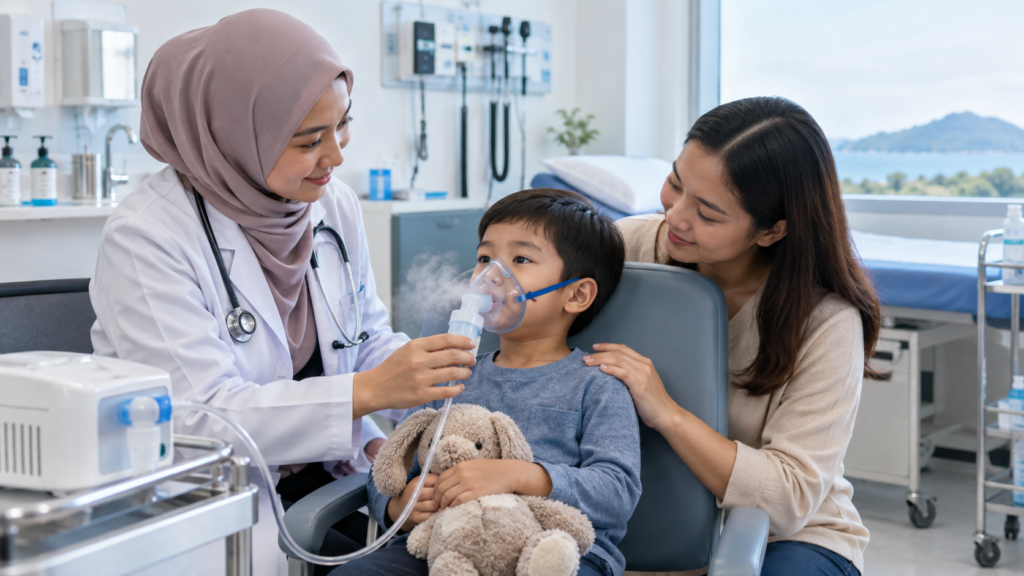
A nebulizer is a medical device that converts liquid medication into a fine mist, allowing it to be inhaled directly into the lungs. Nebulization delivers fast, targeted relief for breathing difficulties including shortness of breath (sesak nafas), wheezing, asthma attacks (serangan asma), and severe cough with excessive phlegm (kahak). It is especially effective for patients who cannot use a standard inhaler, including young children, elderly patients, and those in acute respiratory distress.
At U.n.i Klinik Sandakan, we provide nebulizer treatment and phlegm suction (sedut kahak) services for both adults and children. Our doctor will assess your respiratory condition, administer the appropriate nebulizer medication (ubat nebulizer), and monitor your response to ensure you are breathing comfortably before you leave.
Nebulizer treatment provides rapid relief for acute respiratory symptoms. You should visit our clinic for nebulization if:
Important: If you or your child is experiencing severe breathing difficulty such as blue lips or fingertips, inability to speak in full sentences, extreme drowsiness, or silence where there should be wheezing, you should go to the nearest emergency department immediately. These are signs of a life-threatening respiratory emergency.
Nebulizer treatment is effective for a range of respiratory conditions:
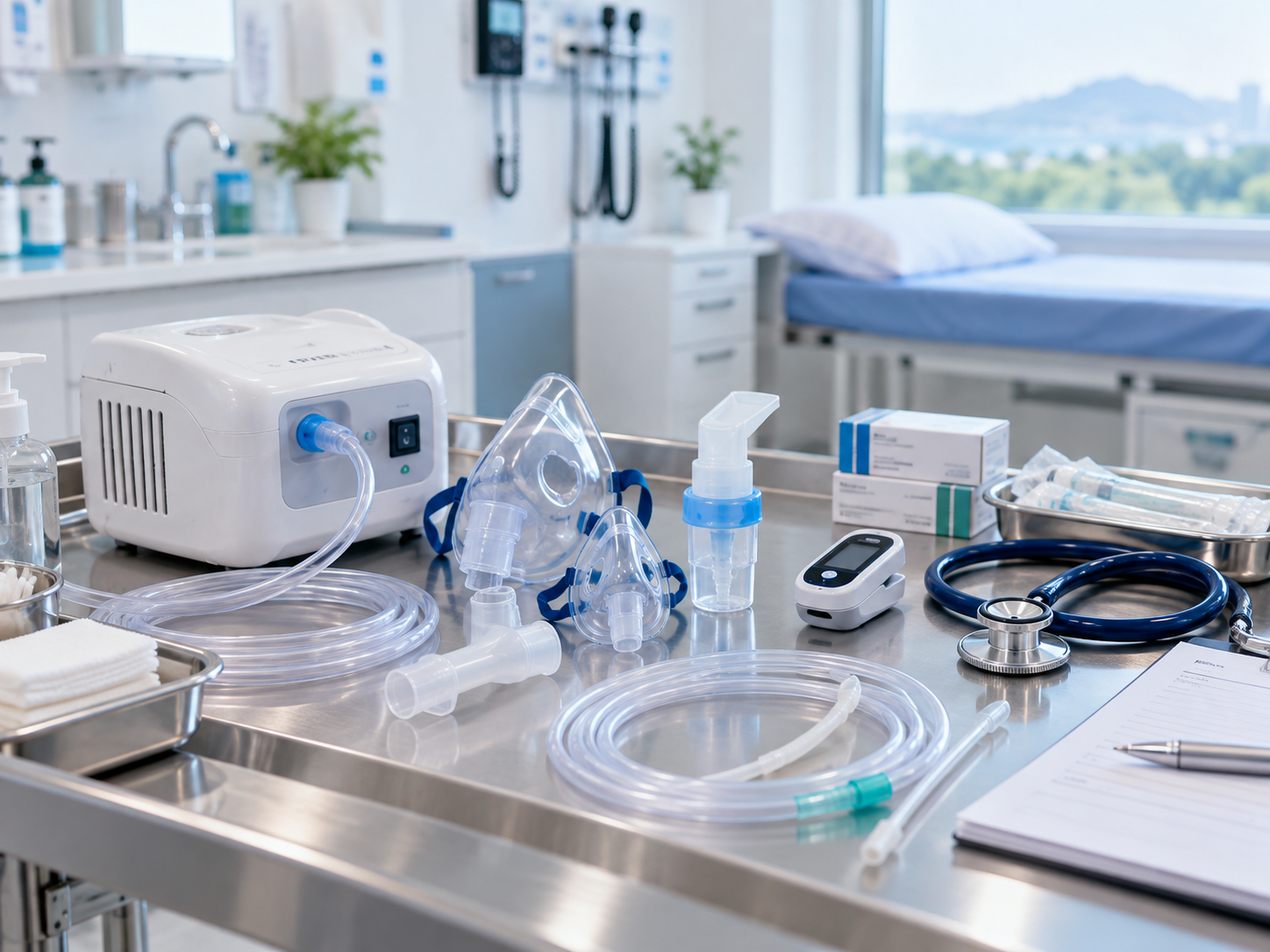 Our respiratory treatment service is designed to provide fast relief and thorough assessment:
Service | Details |
Nebulizer Treatment (Nebulization) | Liquid bronchodilator and/or corticosteroid medication is converted into a fine mist and inhaled through a mask or mouthpiece. Opens the airways, reduces inflammation, and provides rapid relief for wheezing, sesak nafas, and asthma symptoms. |
Phlegm Suction (Sedut Kahak) | Gentle suctioning of excess phlegm (kahak) from the nose and throat using a sterile suction catheter. Especially important for infants and young children who cannot clear phlegm on their own, and for patients with excessive secretions blocking the airway. |
Respiratory Assessment | Our doctor will listen to your lungs with a stethoscope, measure oxygen saturation (SpO2), assess breathing effort, and check for signs of infection or complications before and after treatment. |
Medication Prescription | Based on the assessment, our doctor may prescribe oral medications (antibiotics, cough medication, antihistamines), inhaler refills, or a short course of oral steroids to manage your condition at home after the nebulizer session. |
Multiple nebulizer sessions may be given during the same visit if the first round does not provide adequate relief. Our doctor will monitor your response and adjust the treatment accordingly.
Our doctor will assess your breathing by listening to your lungs, checking your oxygen saturation level (using a pulse oximeter), and evaluating the severity of your symptoms. For children, the doctor will also observe breathing rate, chest movement, and overall alertness. This assessment determines whether nebulization, sedut kahak, or both are needed.
The appropriate medication (ubat nebulizer) is loaded into the nebulizer chamber. You or your child will breathe in the medicated mist through a face mask (for young children) or a mouthpiece (for older children and adults). Each session takes approximately 10 to 15 minutes. You will be seated comfortably and can breathe normally while the medication is delivered.
Advice — Fasting 30 minutes before phlegm suction is recommended to reduce the risk of vomiting during the procedure, especially for infants and young children. If excessive phlegm is blocking the airway, particularly in infants and young children, our medical staff will perform gentle phlegm suction using a sterile suction catheter. This clears the nasal passages and throat, making breathing and feeding easier. The procedure is brief and performed with care to minimise discomfort.
After treatment, our doctor will reassess your breathing to confirm improvement. If symptoms have not resolved adequately, a second round of nebulization may be given. Once you are breathing comfortably, our doctor will provide a home management plan including any prescribed medications, advice on when to use your inhaler, signs that require a return visit, and follow-up instructions.
Yes. Nebulizer treatment is a safe, well-established medical procedure used routinely in clinics, hospitals, and emergency departments worldwide. The medications used typically salbutamol (a bronchodilator) and ipratropium bromide have a strong safety profile and are effective for both adults and children, including infants.
Mild side effects may include a temporary increase in heart rate, slight tremor (shakiness), or a dry or irritated throat. These are short-lived and resolve quickly after the session. Our doctor will monitor you throughout the treatment.
Phlegm suction is also safe when performed by trained medical staff using sterile, single-use catheters. It may cause mild discomfort or brief gagging, especially in young children, but the relief it provides particularly for congested infants who cannot feed or sleep is immediate and significant.
Every nebulizer session is supervised by our doctor, who assesses your condition before and after treatment and adjusts the approach based on your response.
We treat infants, children, adults, and elderly patients. Our team is experienced in managing respiratory distress across all age groups, including fussy or anxious young children.
Both services are available during the same visit. For children with congestion, combining nebulization with sedut kahak provides comprehensive relief.
Breathing problems do not wait for appointments. Walk in any time during our operating hours (9:00 AM to 10:00 PM, Monday to Sunday) for immediate respiratory assessment and treatment.
Each nebulizer session takes approximately 10 to 15 minutes. The entire visit including assessment, treatment, and reassessment typically takes 30 to 45 minutes. If a second round of nebulization is needed, the visit may be slightly longer.
Yes. Nebulizer treatment is safe for infants and young children. A paediatric face mask is used to deliver the medication comfortably. Our staff is experienced in managing young children during nebulization and will help keep your child calm and secure throughout the treatment.
Phlegm suction uses a gentle suction catheter to remove excess mucus from the nose and throat. It is not painful but may cause brief discomfort, gagging, or crying in young children. The procedure is quick, usually completed in under a minute and provides immediate relief for congested babies and children who cannot clear phlegm on their own. We advise fasting for 30 minutes before the procedure to reduce the risk of vomiting.
Yes. We recommend that your child does not eat or drink for at least 30 minutes before phlegm suction. The suctioning process can trigger a gag reflex, and having an empty stomach reduces the risk of vomiting during the procedure. If your visit is for nebulizer treatment only (without phlegm suction), fasting is not required.
Bring your child to the clinic if the home inhaler is not providing adequate relief after the recommended number of puffs, if breathing difficulty is worsening, if you notice chest or rib retractions (skin pulling in between the ribs), or if your child appears unusually drowsy or distressed. Nebulizer treatment delivers a higher dose of medication more effectively than a standard inhaler, especially during acute episodes.
Nebulizer treatment provides rapid relief during an asthma attack but does not cure asthma. Asthma is a chronic condition that requires ongoing management including trigger avoidance, regular use of controller medications (preventive inhalers), and periodic review with your doctor. Our doctor can help set up or review your asthma management plan.
Struggling to breathe? Do not wait. Walk in to U.n.i Klinik Sandakan for immediate nebulizer treatment and phlegm suction. Our doctor will assess your condition, provide fast relief, and ensure you are breathing comfortably before you leave.