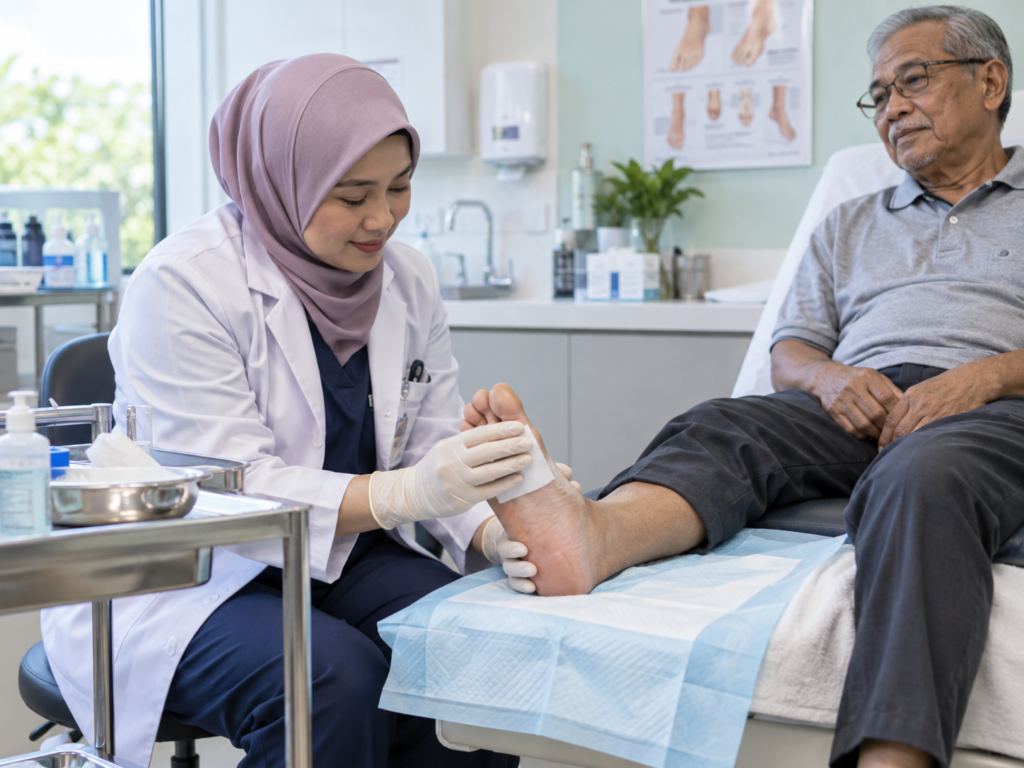
Proper wound dressing and care are essential for preventing infection, promoting healing, and reducing scarring. Whether you have a minor cut, a post-surgical wound, an infected wound (luka bernanah) or a diabetic wound (luka kencing manis) that is slow to heal, professional wound care ensures the wound is cleaned, assessed, and dressed correctly using the right technique and materials.
At U.n.i Klinik Sandakan, we provide professional wound dressing services for all types of wounds acute and chronic. Our doctor will assess your wound, clean and debride it if necessary, apply the appropriate dressing, and advise you on aftercare and follow-up. We also manage ongoing wound care for patients with diabetic foot ulcers, pressure sores, and other chronic wounds that require regular dressing changes (tukar balut / balut luka).
While minor scratches and small cuts can often be managed at home, many wounds benefit from or require professional wound care. You should visit our clinic for wound dressing if:
If in doubt, it is always safer to have a wound assessed by a doctor. Early professional care prevents complications that can turn a simple wound into a serious problem.
Our clinic handles a wide range of wound types, from fresh acute injuries to long-standing chronic wounds:
Wound Type | Description |
Cuts and Lacerations | Clean or jagged cuts from sharp objects, falls, or accidents. May require wound closure with adhesive strips, glue, or sutures depending on depth and location. |
Abrasions and Grazes | Surface wounds caused by friction against a rough surface — road rash, playground falls, sports injuries. Require thorough cleaning to remove debris and prevent infection. |
Infected Wounds (Luka Bernanah) | Wounds showing signs of infection — pus, increasing redness, swelling, warmth, or foul smell. May require wound irrigation, debridement, antiseptic dressing, and oral or topical antibiotics. |
Diabetic Wounds (Luka Kencing Manis) | Foot ulcers and slow-healing wounds in patients with diabetes. These require specialised wound care including regular debridement, offloading, infection control, and optimised blood sugar management. Left untreated, diabetic wounds can lead to serious complications. |
Post-Surgical Wounds | Wounds from minor surgery, stitches, or procedures (including post-circumcision wounds). Require sterile dressing changes, wound monitoring, and suture or staple removal when due. |
Burns (Minor) | First-degree and superficial second-degree burns from hot liquids, cooking, or contact. Assessed for depth, cleaned, and dressed with appropriate burn dressings. |
Chronic Wounds | Wounds that have not healed after 4 or more weeks — including venous leg ulcers, pressure sores (bedsores), and non-healing surgical wounds. Require ongoing wound management with regular dressing changes and medical review. |
Animal and Insect Bites | Dog bites, cat bites, and insect bites that break the skin. Require thorough cleaning, assessment of infection risk, tetanus evaluation, and in some cases, antibiotic prophylaxis. |
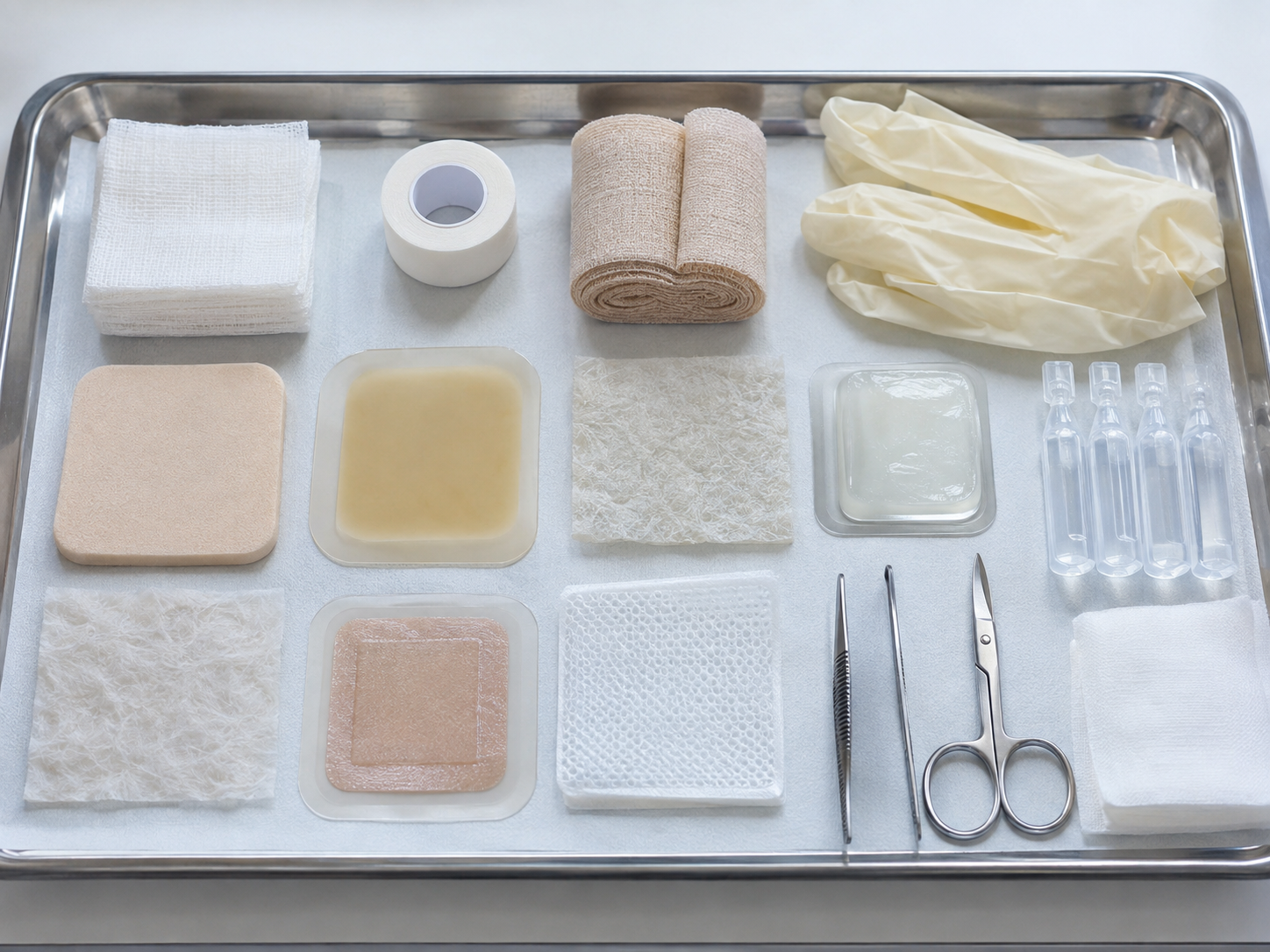
Choosing the right dressing is critical to wound healing. Different wounds require different dressing materials depending on the wound type, depth, level of moisture, infection status, and stage of healing. At our clinic, our doctor selects the most appropriate dressing for your wound, not a one-size-fits-all approach.
Type of Wound Dressing | Description |
Gross Dressing (Simple Dressing) | A basic sterile dressing consisting of gauze pads and adhesive tape or bandage. Used for clean, minor wounds such as small cuts, abrasions, and post-procedure wounds with minimal discharge. Provides a protective barrier against dirt and bacteria while allowing the wound to heal. The most commonly used dressing for straightforward, low-risk wounds. |
Burn Dressing | Specialised non-adherent dressings designed for burn wounds. These dressings do not stick to the delicate, damaged skin surface, preventing pain and further tissue damage during dressing changes. Burn dressings help maintain a moist healing environment, reduce pain, and protect the burn from infection. Used for first-degree and superficial second-degree burns. |
Foam Dressing | Soft, absorbent dressings made from polyurethane foam. Designed to absorb moderate to heavy wound discharge (exudate) while maintaining a moist environment at the wound surface. Comfortable, cushioning, and easy to apply. Commonly used for diabetic foot ulcers, pressure sores, leg ulcers, and other chronic wounds with moderate to heavy exudate. |
Hydrocolloid Dressing | A self-adhesive, waterproof dressing that forms a gel when it comes into contact with wound fluid. Creates a moist healing environment that promotes new tissue growth and protects the wound from external contamination. Suitable for light to moderately exuding wounds, superficial burns, pressure sores, and as a protective cover over healing wounds. Can be left in place for several days, reducing the frequency of dressing changes. |
Alginate Dressing | Made from natural seaweed fibres (calcium alginate), these dressings are highly absorbent and form a soft gel when they come into contact with wound fluid. Ideal for wounds with heavy exudate — deep cavity wounds, infected wounds, and heavily draining chronic wounds. The gel maintains moisture at the wound bed while absorbing excess fluid. Alginate dressings also have mild haemostatic properties, helping to control minor bleeding. |
Hydrogel Dressing | Water-based gel dressings that donate moisture to dry wounds. Used to soften and rehydrate hard, dry, or necrotic (dead) wound tissue, making debridement easier and less painful. Hydrogels provide a cooling, soothing effect and are commonly used for dry wounds, sloughy wounds, minor burns, and wounds that need moisture to promote healing. Available as gel sheets or amorphous gel applied directly to the wound bed. |
Collagen Dressing | Advanced dressings containing collagen, the protein that forms the structural framework of skin. Collagen dressings support and accelerate the body’s natural wound repair process by providing a scaffold for new tissue growth. Used for chronic, slow-healing wounds such as diabetic ulcers, venous leg ulcers, and pressure sores that have stalled in the healing process. Particularly beneficial for wounds that are clean but not progressing despite standard care. |
Silicone Dressing | Soft, non-adherent dressings with a silicone contact layer that sits gently against the wound surface. The silicone layer prevents the dressing from sticking to the wound bed, making dressing changes virtually painless especially important for patients with sensitive or fragile skin, burn wounds, and children. Silicone dressings are also used in scar management, where silicone sheets or gel are applied over healed wounds to flatten, soften, and reduce the appearance of scars, including keloid and hypertrophic scars. |
Our doctor will select the most appropriate dressing type based on your wound’s specific needs. As your wound progresses through different healing stages, the dressing type may change. For example, starting with an alginate dressing for a heavily draining wound and transitioning to a hydrocolloid or foam dressing as the exudate reduces. This tailored approach ensures optimal healing at every stage.
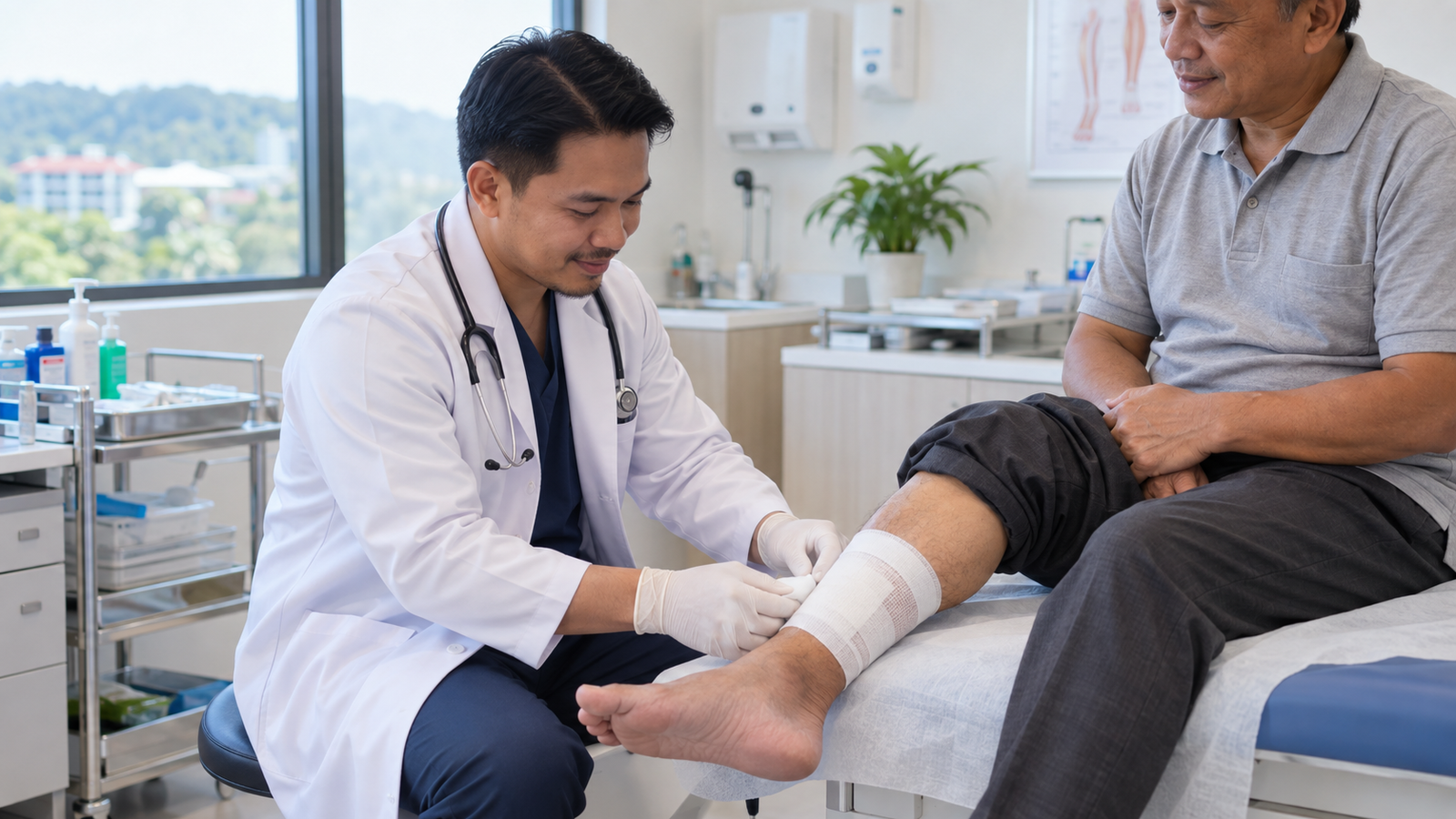
Our doctor will examine the wound to assess its size, depth, location, and condition. This includes checking for signs of wound infection (redness, swelling, pus, warmth, pain), the presence of foreign bodies or debris, and whether underlying structures (tendons, bone, nerves) may be affected. For diabetic patients, the doctor will also assess blood flow and sensation in the affected area.
The wound is cleaned thoroughly using sterile saline or antiseptic solution to remove dirt, bacteria, and dead tissue. If the wound has dead or unhealthy tissue (slough or necrotic tissue), the doctor may perform the gentle removal of non-viable tissue to create a clean wound bed that promotes healing. This is especially important for chronic wounds and diabetic ulcers.
Depending on the wound type and timing, the doctor may close the wound using adhesive strips (Steri-Strips), tissue glue, or sutures (stitches). Not all wounds are suitable for closure such as infected wounds and bites are often left open to heal from the inside out, with dressings applied to protect the wound bed.
The appropriate dressing is selected based on the wound type, stage of healing, and level of exudate (fluid). Our doctor chooses from a range of dressing types such as gross dressing, foam, hydrocolloid, alginate, hydrogel, collagen, silicone, or burn dressing to create the best environment for healing. The dressing is applied securely and comfortably.
Our doctor will provide clear aftercare instructions on how to keep the wound clean, signs of infection to watch for, when to return for a dressing change (tukar balut), and whether antibiotics or a tetanus booster are needed. For chronic wounds, a regular dressing schedule will be set up so the wound is monitored and managed consistently until it heals.
Patients with diabetes face a higher risk of developing wounds particularly on the feet that heal slowly and are prone to infection. This is because diabetes can affect blood circulation, nerve function (causing numbness), and the body’s ability to fight infection. A luka kencing manis that is not properly treated can lead to serious complications including deep tissue infection, bone infection (osteomyelitis), and in the worst cases, amputation.
At U.n.i Klinik Sandakan, our diabetic wound care service includes:
If you have diabetes and notice any wound, blister, callus, or discolouration on your feet no matter how small, do not wait. Early professional assessment is the single most important step in preventing complications.
Yes. Professional wound dressing is a routine medical procedure performed using sterile instruments and materials. Our clinic follows strict infection control protocols — all instruments are sterilised or single-use, gloves are changed between patients, and the treatment area is cleaned thoroughly.
The procedure may cause mild discomfort, especially during cleaning or debridement of sensitive wounds. If needed, our doctor can apply a local anaesthetic to numb the area before working on the wound. Your comfort and safety are prioritised throughout the visit.
Every wound is assessed by our qualified doctor, not just cleaned and dressed by a nurse or assistant. You get a proper clinical evaluation, infection check, and treatment plan.
From minor cuts to diabetic foot ulcers, infected wounds to post-surgical care, we handle acute and chronic wounds of all types under one roof.
We stock a comprehensive range of wound dressings such as gross, foam, hydrocolloid, alginate, hydrogel, collagen, silicone, and burn dressings so our doctor can match the right dressing to your wound type and healing stage.
Open Monday to Sunday, 9:00 AM to 10:00 PM. No referral needed. Walk in for acute wound care or book regular dressing change appointments via WhatsApp.
This depends on the wound type and condition. Fresh, clean wounds may need a dressing change every 2 to 3 days. Infected wounds or wounds with heavy discharge may need daily changes. Chronic wounds such as diabetic ulcers typically require dressing changes 2 to 3 times per week. Our doctor will set a schedule based on your wound's specific needs.
For some wounds, yes and our doctor will show you or your caregiver how to perform dressing changes at home between clinic visits. However, wounds that require debridement, infection monitoring, or specialised dressings should be managed at the clinic.
The dressing type is selected based on the wound type, depth, amount of discharge (exudate), infection status, and healing stage. For example, a heavily draining wound may need an alginate or foam dressing, while a dry wound may benefit from a hydrogel. As the wound heals, the dressing type may be changed to match the wound's changing needs. Our doctor reassesses at every visit.
Signs of wound infection include increasing pain or tenderness around the wound, spreading redness, swelling, warmth to the touch, pus or cloudy discharge, foul smell, and fever. If you notice any of these signs, visit our clinic promptly as early treatment of wound infections prevents them from becoming serious.
Yes, immediately. Diabetic wounds (luka kencing manis) require professional assessment and care even if they appear minor. Diabetes affects circulation and nerve sensation, meaning wounds can worsen rapidly without obvious pain. Early professional wound care is the best way to prevent serious complications.
Yes. If your wound is at risk of tetanus (caused by a dirty, rusty, or contaminated object) and you are not up to date on your tetanus vaccination, our doctor can administer a tetanus toxoid booster during the same visit.
Wound cleaning may cause mild discomfort, especially for fresh or sensitive wounds. If needed, our doctor can apply a local anaesthetic to numb the area before cleaning or debridement. Most patients find the process manageable, and the discomfort is brief.
Do not let a wound get worse. Whether it is a fresh injury, an infected wound, or a diabetic wound that needs ongoing care, visit U.n.i Klinik Sandakan for proper wound dressing and professional wound management.